

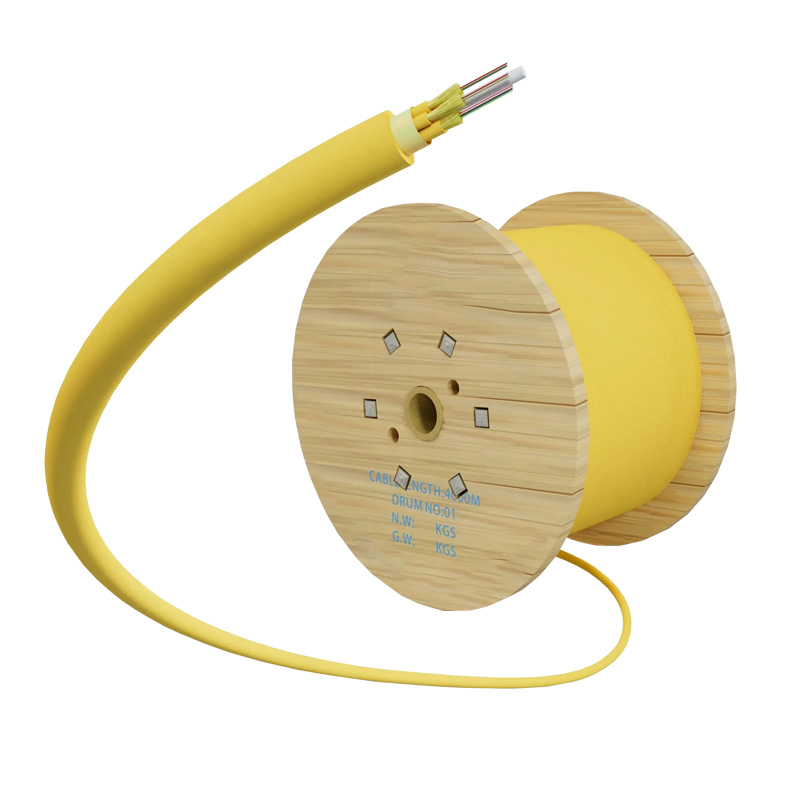
These cables bundle several 900µm tight-buffered fibers within a single jacket. Key structural elements include:
Tight Buffer: A 900µm layer (often LSZH) directly protects the fiber, allowing for direct connectorization without splicing.
Strength Member: Aramid yarn (or fiberglass) provides tensile strength and protects fibers during installation.
Central Strength Member: Some designs (like RFS) use a central FRP rod for added rigidity.
Outer Jacket: Typically LSZH (Low Smoke Zero Halogen) for indoor safety and flame retardance.
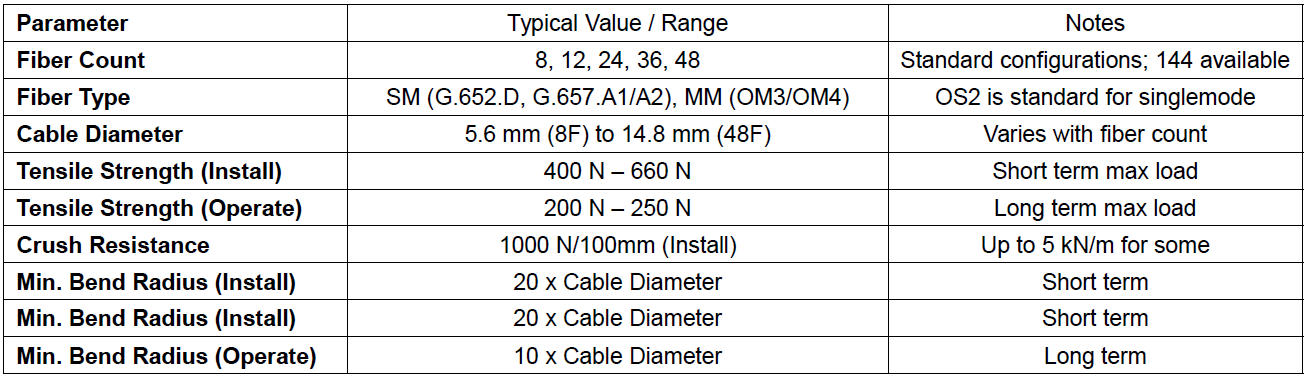
Fiber Count: Commonly ranges from 2 to 48 fibers (with 8, 12, and 24 being standard), though some designs support up to 144.
Cable Structure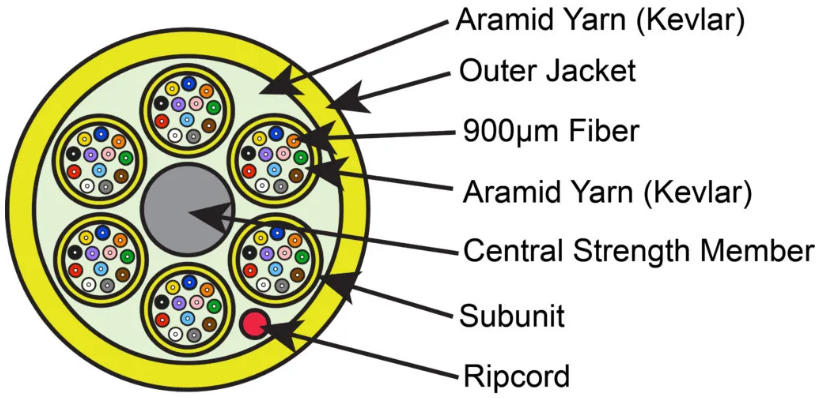
Add: No.802, Zhuangyu Business Building, Songhe North Rd, Bao'an District, Shenzhen City, China 518105
Tel: +86.137.1380.1094
Fax: +86.769.8209.1089
E-mail: sales@articfiber.com
Copyright © ARTIC FIBER OPTIC CO.,LTD All Rights Reserved.